Sunday, 8 July 2012

Boxset Binge #6 - Braquo (Season 1 & 2)


Currently it would seem that the American drama powerhouses such as HBO and Showtime are the ones currently dominating the market when it comes to quality TV drama and as a result when it comes to picking new shows to watch, that I often find myself opting for the American presentations, especially when the quality of the acting and especially the writing has frequently proven, that they are the ones truly setting the benchmark for TV drama. More so when you consider the abysmal BBC productions being churned out with predictable writing and often with production values which would make even the SYFI movie of the week blush, while further frustration only being caused by their refusal to attempt anything risqué (unless it features lesbians) for fear of reprisal (just look at the current state of “Doctor Who” for a prime example of their shortcomings), leaving the likes of Channel 4 Productions and more recently Sky Productions to provide even the slightest hope that the TV drama market might not now be an American dominated arena.  Still it is as I make such sweeping statements that this French drama would appear seemingly from nowhere and turn everything on its head.

Now before you go any further I should warn of potential spoilers ahead, due to the fact that this review is covering both seasons of the show as one uber boxset binge.

Set around a squad of tough and frequently rulebook-ignoring cops, led by Eddy Caplan (Jean-Hugues Anglade), who acts like a father figure to the other members of his squad which include the drug-addled and volatile Theo (Nicolas Duvauchelle), the Man Mountain and chronic gambler Walter (Josepth Malerba) and the feisty and permanently leather jacket clad Roxane (Karole Rocher). Working frequently in the grey area between the police and criminals, their methods constantly question which side of the law they belong to while sharing an unbreakable bond to keep their off-the-book mission from their superiors. Season one sees the team, attempting to clear the name of their former colleague and squad leader Max, who commits suicide after being wrongly accused of corruption. Season two see’s Caplan being sent undercover to infiltrate a gang of former mercenaries known as “The Invisibles”, who have stolen 400 kilos of gold, while adjusting to the fallout from the events at the end of season one.

 
Created by the former cop turned director Olivier Marchal, who previous drew on his experiences to bring us films like  “A Gang Story” as well as the incredible and painfully overlooked “36”, with this series truly being the acumination of his work so far as he appears here on directing and writing duties to craft a truely gritty police drama, which has already drawn comparisons to both “The Shield” and “The Wire” and despite being short seasons with each one consisting of eight episodes, it never feels as if anything is being sacrificed due to lack of run time and if anything only feels like a tighter and much faster paced show than some of it’s American contemporaries which generally clock in around 21 episodes per season. With such a tight schedule, Marchal has the advantage of being able to suddenly drop in moments of actions, rather than having to spend several episodes building up to them, though never at the same time feeling the urge to telegraph these moments, which frequently come by surprise and even more often without warning.

Caplan’s crew while showing little regard for police procedure are not a lawless band of thugs, even though their actions often put them dangerously close to crossing the line between the police and the criminals they hunt. Still with their unwritten code of honour they do what they must to get the job done, while frequently getting mixed up in the dark Parisian underbelly as Caplan more than once throughout the series makes a deal with the devil in order to further his investigation. As an interesting counterpoint to the often questionable actions of the team is Internal Affairs officer Vogel (Geoffroy Thiebaut), who will do anything to ensure that Caplan is exposed for his laundry list of infractions, while Vogel himself is played out with a suitably villainous edge as he ruthlessly bends the rules to suit his obsessional quest for justice, while only becoming more twisted and dangerous as the series goes on, with his action over the course of the first two seasons only being smaller moves in his much larger game plan, with the finale of season 2 setting him up as truly a key player in the events of season 3, which right now cannot come quick enough.

Vogel however is just one of the many interesting characters, who appear over the course of these first two seasons, making it far from surprising that it has drawn comparisons to “The Wire”, with season 2 being given more time to explore the shady dealings of the Parisian underworld in particular the Arifa gangster family, whose matriarch (Annie Mercer) is possibly one of the more ruthless crime family heads to be seen of late, especially with her psychotic sons on hand to carry out her various wims, while engaging in a bloody turf war with the local Armenian gangsters. Still rather than being a second thread story as it would first appear, their story is soon cleverly woven into the main plot line, especially when Madame Arifa gets involved in a gold trade with The Invisibles whose own motives are the slowly revelled over the course of the second season and proving like so many things in the series that nothing is ever as black and white as it would first seem.

“Braquo” is a high end production throughout with series creator Marchal clearly wanting to prove that French drama is equally comparable to the output of the American drama powerhouses like HBO, while certainly not holding back when it comes to the violence, which while frequently explicit never is on the side of gratuitous or shock value. What is equally refreshing about the series is the fact that it is being broadcast subtitled, rather than being given any kind of questionable dub track and with the talented cast assembled here, it only makes it more of a benefit to be able to watch it in it’s native language, while subtitle haters will no doubt be sweep up like the rest of us in the fact paced drama to really care to much about them, especially when this is one of the few dramas to deserve the honor of being classed as unmissable.

Monday, 2 July 2012

The Game


Title: The Game
Director: David Fincher
Released: 1997
Staring: Michael Douglas, Sean Penn, Deborah Kara Unger, James Rebhorn, Peter Donat, Carroll Baker

Plot: Nicholas Van Orton (Douglas) is a wealthy banker, who has chosen to remove himself from any form of human contact were possible outside of his work and his housekeeper. However on his 48th birthday he finds the occasion overshadowed by his father committing suicide at the same age, while he is greeted by a surprise visit from his brother Conrad (Penn) who he hasn’t seen in years, giving him a card for “Consumer Recreation Services (CRS)” who offer to provide that what is missing. Little does Nicholas know that after his initial meeting with them that the game has begun until strange things start to happen around him.


Review: Why is it that there are films which are seemingly destined to be ignored for the rest of eternity? No I’m not talking about the movies which make up the usual fodder of this blog, but rather films which are released in the mainstream and seemingly vanish without a trace soon after. A fate that seems to have become of this film, which followed hot of the heels of director Fincher’s phenomenal thriller “Seven”, the film which revived his career after the problem riddled yet seriously underrated “Alien 3” making it’s only more of a shame that this film still remains largely unseen by most.

I will warn you now before I go any further that this review is likely to contain potential spoilers and as such I would advise those of you who like your surprises left in tact to stop reading now and go and see this film, while for the rest you have been warned.

Okay I should admit I am slightly biased when it comes to Michael Douglas movies, as while he has made his fair share of box office fodder, he has throughout his career pulled out some really surprising performances, such as his postal former defence engineer in “Falling Down” to his pot smoking professor in “Wonder Boys”, let alone his most memorable embodiment of 80’s greed and excess, Gorden Gecko in “Wall Street”, with Douglas having a real knack for playing men of power much like what we are given here with Nicolas, and even now Douglas is continuing to give incredibly engaging performances with this film being yet another master class for his particular acting style, as there is not one scene in this movie were he is not completely convincing as the man of all power suddenly finding himself powerless and being forced to play someone else’s game, after years of growing accustomed to being the one in control, something further emphasised by his self imposed isolation from the rest of humanity, let alone his idea of a perfect birthday dinner is a cheeseburger served on a silver platter, to be eaten while watching CNN in his vast mansion which he inherited from his father and were he now lives alone.

A strange film to say the least, especially as it works by slowly laying layer upon layer of weirdness as the film progresses, so that just when you think you have got it figured out, it throws something new into the mix. It's also a film which certainly works best if entered with an open mind and not questioning the smaller details, as there are numerous points were the film takes real leaps in plausibility especially in terms of the reach of the individuals behind the game, who seemingly are an all seeing and controlling force able to access bank accounts and frequently put participants lives in danger with no form of comeuppance or perhaps there is something in the small print of their contract which allows them to do what the hell they want.

Still what starts with small events such as his briefcase not opening and having a drink being spilled on him by a supposedly clumsy waitress is soon escalated when he finds a creepy clown doll, even more disturbingly dressed to look how Nicolas’s father did when he committed suicide. Soon things are getting even weirder as he finds himself being chased by shadowy men, while frequently finding himself not knowing who can trust, with his bank accounts being emptied and seemingly all records relating to his existence being deleted, as Nicolas continues to try and find out who is behind the game with his sole ally coming in the form of Christine (Unger) a former waitress recruited to play a part in the game, but even though she claims to be helping him, Nicolas is never sure if she is still playing a role or genuinely trying to help him.

While towards the end of the film plausibility is stretched to it’s absolute limit, with Nicolas being dumped in an empty tomb in Mexico and being forced to barter and trade his way back into the city, with a humbling scene of Nicolas entering a diner, looking beyond dishevelled with his clothes stained with dust and looking like he hasn’t slept in days, begging for someone to give him a ride, with his fall from glory only made all the gut wrenching by the believable performance Douglas brings to this character throughout and no doubt the reason we are willing to make such leaps in plausibility with his character and what happens to him.
For myself though the most interesting scene was towards the end of the film, were Nicolas has located the headquarters of CRS and upon entering the cafeteria and sees all the various characters he has encountered on his journey, as he finally see’s what is behind the curtain and it’s the sort of the place I’m sure airports also have to store all their own wacky characters that you only seem to find at airports.

The direction is incredibly focused with Fincher once more showing a keen eye for the smallest of details, while shooting in a number of sumptuous locations all while keeping the sense of ominous intentions always lurking somewhere under the surface, while also taking full advantage of working with a larger budget than he had been given previously, thanks to the success of “Seven” which has originally been scheduled to be shot after this film and was only pushed ahead of “The Game” thanks to Brad Pitt becoming available for filming. Still Fincher always seems to be in control, as he plays the puppet master constantly tormenting Nicolas that bit more, while refusing to include shots of those pulling the strings behind the curtain and no hints to what is actually happening and in doing so forces us to live through this nightmare with him.

A paranoid trip right up until its final macabre twist of the knife, this film will keep you guessing right up until the end, while certainly being one for fans of films such as the equally underrated “The Machinist” or “Oldboy” and is as much about the journey as the final payoff, this is one film which deserved to be more recognised than it was upon it’s original release and is well worth hunting down.

Sunday, 24 June 2012

Water Lilies


A late contribution to the Queer Film Blogathon hosted by Garbo Laughs.

Title: Water Lilies
Director: Céline Sciamma
Released: 2007
Staring: Pauline Acquart, Louise Blachère, Adele Haenel, Warren Jacquin

Plot: Three young girls on a synchronised swimming team, are forced to deal with awakening sexuality and the pressure of virginity.


Review: It has been said that the earliest years of our lives, especially our teenage years are amongst the hardest and it’s this entry point into adulthood which Director Sciamma has chosen as her point of interest for her debut film.

The three young female leads at the centre of this film are each wildly different from the other with the main focus falling onto Marie (Acquart) who is both quiet and almost expressionless throughout, while also harbouring a secret love for the beautiful head of the swim team Floraine (Haenel) whom is almost Marie’s opposite as she projects an air of confidence, while fuelling rumours of her sexual experience in order to maintain her popularity. Marie’s sole support in this situation comes from her friend Anne (Blachère), who despite being the heavier girl on the team, doesn’t seemingly allow it to affect her while also being prone to impulsive behaviour, while obsessing over François (Jacquin) a member of the boys water volleyball team.

For most of the film, we follow Marie whose obsession with Floraine leads to an unusual friendship of sorts with Floraine relying on Marie for favors, which more often than not take the form of an alibi for Floraine's various liaisons with assorted guys, yet as she later reveals to Marie, these are purely non sexual meet ups due to her fear of bleeding via penetration and that her she only fuels her own sluttish reputation solely to maintain her position as the most wanted girl at school. Still despite being entrusted with such a powerful secret, Marie maintains a questionable level of obedience to Floraine’s various whims, which often see her sitting around car parks or outside clubs waiting for Floraine, but never once feeling the urge to revel Floraine’s secret to anyone, even though Floraine never seemingly shows the slightest sign of wanting to return Marie’s feelings for her.

As a result of Marie’s friendship with Floraine, her relationship with Anne soon begins to flounder, as Marie finds herself becoming increasingly frustrated with her impulsive friend, even though she is the sole person in which she is able to confide about her feelings for Floraine. Still despite her young age, there is never any questioning of these feelings, while Marie never identifies herself as being either straight or gay, with Sciamma focusing more on these blossoming feelings than trying to attach any form of label to her characters. Still sex on a whole is never portrayed as anything resembling enjoyable or sensual, but more a political tool to announce status amongst your peers, while Anne is left repulsed after loosing her virginity in a casual lay with Floraine’s boyfriend, who has long since grown bored of being regularly rejected and seeks out Anna for instant gratification, not that she particularly seems to mind, especially when she can use it as a power play against Floraine’s control over Marie. Meanwhile despite her quest to be with Floraine seemingly being on the path that Marie wants with Sciamma teasing out their relationship with a number of almost moments, Marie is ultimately reduced to becoming the tool of Floraine’s deflowering, in a loveless event which ultimately pushes them further apart than bringing them closer together.

Shot from solely the girls’ perspective with no focus being given to subplots outside the three girls, the film is also almost devoid of any adult characters, with the few who do appear often being authority figures such as the coach of the swim team who chastises girls for not shaving under their arms or the pervert male coaches. Still Sciamma shoots the film with a thoughtful pace and despite running to a brisk 85 minutes it still feels a lot longer because of this, especially as Sciamma waits until the final quarter to unleash a flood of emotions upon the audience, who have been able to stick with the teasingly drawn out relationships between the main characters, while keeping the cinematography simple throughout as she chooses instead to focus on her characters, rather than aiming for any kind of visual flair and instead shoots the film with an indie rawness. Infact the sole flashy shot we do get is a prolonged underwater shot of the girls performing their routine, no doubt believing the drama of the story should be enough to hold the audiences attention without having to resort to fancy camera tricks to keep their attention.

While a spot on in capturing the essence of teen angst, the film admittedly is not going to be for everyone, especially with the girl being portrayed as almost miniature adults, rather than the usual smart assed and talkative creations popular with American cinema or the expletive heavy and over sexed teens, currently being overused as the template in British cinema. Still even with such a thoughtful style it still remains a highly watchable film.

Sunday, 17 June 2012

The Doom Generation

This is part of the LBGT Blogathon hosted by YAM Magazine, while also a prelude to next week's Queer Film Blogathon hosted by Garbo Laughs.


Title: The Doom Generation
Director: Gregg Araki
Released: 1995
Staring: James Duval, Rose McGowan, Johnathon Schaech, Dustin Nguyen, Margaret Cho, Perry Farrell, Parker Posey, Christopher Knight, Lauren Tewes

Plot: Jordan White (Duval) and Amy Blue (McGowan) find themselves on a road trip of sex and violence after a chance meeting with fellow outsider Xavier Red.

Review: A classic example of Director Gregg Araki’s more infamous style of filming, while also the second film in his “Teenage Apocalypse Trilogy”, a trilogy created from the use of reoccurring themes and ideas rather than characters and plot lines. This film was also the first of Araki’s films I ever saw, when I caught a late night showing back when I was still an angry youth starting college, were its punk rock sensibilities appealed strongly, much less the fact it was filled with gratuitous sex, which was still quite a rarity for films back in the late 90’s rather than our current over sexed decade, were full frontal nudity and sex has nowhere near the surprise factor it had back then. With this in mind I was eager to see if it still if the film still had the same appeal now that it did back then, coming back to it with an older view point and perhaps less angry standpoint.

Opening at an underground metal club were the words “Welcome To Hell” are written in fiery silhouette pretty much highlight the current state of society, for if the third film of this trilogy “Nowhere” was the end of days, this film is certainly the lead up to the pending apocalypse as society is quickly descending into a lawless cesspit of depravity and commercialisation, with the youth seemingly have long since become despondent and jaded about the world around them. It’s a view point which Amy essentially embodies as she scowls her way through this misadventure, colorfully cursing anyone who’d stand up to her, while seemingly only caring about her boyfriend Jordan. Jordan on the other hand is almost like the polar opposite to Amy and making him an even more surprising boyfriend choice, especially with his permanent positive outlook which seemingly steams from his naivety to the world around him. Jordan’s naivety and general worldly outlook especially comes into question when the couple rescue Xavier from a gang of punk goon (played by the band Skinny Puppy) a charismatic drifter who tends to invoke spontaneous act of violence whenever he is in any area for too long.

Violence of course being is one of the key themes of this film alongside cultural symbolism and relentless eroticism, with the violence in particular here being especially memorable let alone the trigger point of the trio’s misadventure stemming from the accidental killing of a quick stop clerk. Still it is a subject with Araki chooses to shoot in a variety of different ways throughout the film from humorous (a bar patron accidentally receiving a samurai sword to the crotch) to gratuitously graphic as seen by the death of the clerk who not only has his head blasted clean off, but then follows up by having said head continuing to incoherently burble away.

Meanwhile his other main obsession sex is shown in an unsurprisingly graphic style and literately to the point were nearly every other scene seems to involve Amy having sex with either Jordan or Xavier or both, as the film climaxes (in more way than one) with a spontaneous threesome. This development with the group dynamic never really sat right with me and even now still doesn’t exactly make anymore sense, especially when Amy is shown openly hating Xavier only to suddenly feel an uncontrollable urge to sleep with him, as soon as the first chance appears. Equally frustrating is Jordan’s reaction to this situation which he just happily accepts as if it’s a perfectly normal situation, rather than raising any kind of complaint!?! What is most surprising here though is Araki’s fascination with making a film that features purely heterosexual sex, something he seems especially proud off seeing how he opens with the title card “A Hetrosexual Movie By Gregg Araki”, while his other films had often approached the subject of sex with an open mind to showing all persuasions on equal terms, making the point of highlighting such a point only further confusing.

With Araki so focused on his cramming in as much sex and violence as possible, it is unsurprising that the plot is as paper thin as it is, with the sketchily drawn trio travelling down a seemingly endless series of desert roads in a continuing cycle of sex and violence, with the only real plot point outside of this being the reoccurring cases of mistaken identity which Amy causes with various oddball characters claiming that she is their ex partner and often providing the trigger point for further spontaneous violence, while making comparisons to Oliver Stone’s “Natural Born Killers” almost inevitable and while he might describe it as a black comedy or as some DVD covers proclaim “A Road Murder Sex Comedy” it’s far from the most humorous of films, with the humour content being strongly dependent on how funny you find the acid tongued put downs by Amy, especially when her vocabulary is interesting to say the least.

Shot with an almost intentional focus on making the film look as trashy as possible; Araki has seemingly created a teen movie which intentionally sets out to rebel against the cookie cutter teen movies of the Hollywood mainstream, as counters the virginal teens of those movies with his despondent trio here, who are more than happy to blitz their way through life in a haze of pot and sex, with the art direction containing an excessive yet controlled quality to it, while even the more normal sets still containing subtle surreal elements such as the quick stop sign which proclaims “Shoplifters Will be Executed” or the record store thought bubbles.

One of the more shallow Araki movies, it’s punk esq style of storytelling and film making will no doubt still ring true with some, but I can’t say that it is still a film which I look upon with the same awe that I did back when I first saw it, even though it is still a bizarrely fascinating movie for all of its flaws.

Thursday, 14 June 2012

Nowhere

This is part of the LBGT Blogathon hosted by YAM Magazine, while also a prelude to next week's Queer Film Blogathon hosted by Garbo Laughs.


Title: Nowhere
Director: Gregg Araki
Released: 1997
Staring: James Duval, Rachel True, Chiara Mastroianni, Debi Mazar, Kathleen Robertson, Christina Applegate, Nathan Bexton, Guillermo Díaz, Jeremy Jordan, Sarah Lassez, Jason Simmons, Ryan Phillippe, Heather Graham, Jordan Ladd, Thyme Lewis, Joshua Gibran Mayweather, Mena Suvari, Scott Cann, John Ritter, Gibby Haynes

Plot: Following a group of LA teens over the course of 24 hours. A day made up of a volatile cocktail of sex, drugs, suicide, bizarre deaths and alien abduction.


Review: There are certain films which throw down a gauntlet to its audience from their opening scenes, with prime examples of this being the fire extinguisher bludgeoning in “Irreversible” or Pumpkin and Honey Bunny in “Pulp Fiction” which almost seem challenge the audience to watch past this point, while often giving them a good idea of what is in store should they choose to stick around. “Nowhere” is another of these films as we open to Dark (Duval) jacking off in the shower to fantasies of his bisexual, polyamorous girlfriend Mel (True) aswell as his shy classmate Montgomery (Bexton)….ladies and gentlemen welcome once more to the world of Gregg Araki!

The final film in his “Teenage Apocalypse Trilogy” which started with the colorfully named “Totally Fucked Up” and followed by “The Doom Generation” now ends with this film which seemingly sets out to top everything which came before it. While it has frequently being described as “Beverly Hills 90210 On Acid”  for myself it feels closer to Bret Easton Ellis’s “Less Than Zero” given a David Lynch twist, a book whose own film version seemed almost like a different book altogether and minus any of the frequently nightmarish imagery that Ellis’s debut novel so proudly contained. Needless to say Araki has truly captured that anarchic spirit here to create an alternative vision of LA, were teens care for little outside of the pursuit of casual sex and drug taking and were the sole focus is seemingly on making to Jujyfruit’s (Haynes) party.

Split into eight interweaving stories, the film constantly switches between plotlines with the main of these plots revolving around Dark, a film student who constantly films everything happening around him and living under the belief that the world could end at any moment. Meanwhile his only other concern seems to be with getting laid, be it with his latest crush the shy and retiring Montgomery or his supposed girlfriend seems more concerned with sleeping with anything that moves, in particular Lucifer (Robertson) whose acid tongue is the cause of much anguish for Dark. The other plots meanwhile vary in their integral nature to the plot from the naïve Egg (Lassez) and her inadvertent meeting with “The Teen Idol” (Simmons) and Cowboy’s (Díaz) relationship issues with his drug addicted boyfriend Bart (Jordan). Meanwhile other plotlines such Nihilistic couple Shad (Phillippe) and Lilith (Graham) or Mel’s younger brother Zero (Mayweather) and his girlfriend Zoe’s (Suvari) attempts to find the secret location of Jujyfruit’s party are less integral and serve more as a distraction mainly from Dark and his various issues.

Once more Araki refrains from portraying these storylines in any form of normality, as he randomly switches between the plots seemingly on a whim, while inserting surreal offshoots like the random alien abductions and Bart’s twisted S&M session to ensure that the viewer is kept in a states of almost permanent confusion as to what they are watching and leading me for many years after my first viewing of this film, to describe it as a film which makes a lot more sense when your drunk! This art house style of filming is also carried over into the art direction with nearly every frame of this film appears to have been shot with the maximum amount of artistic freedom with sets often appearing like art installations as especially seen in the bedrooms of Bart and Egg, while saving the blow out for Jujyfruit’s party which in places almost seems like a tribute to Michael Alig’s “Club Kids”. Having seen the course of Araki’s career following this film, in many ways this film now feels like a last hurrah for his surreal roots before he moved onto more mainstream projects, before returning to this style of film making with “Kaboom”. Still the downside of this vision is that while it might look very pretty on the surface, it does seem ultimately hollow beneath especially when it can at times seem like a constant stream of casual sex and drug taking. Still with this film he has created a vision of LA seemingly on the brink of its final days as frenzied televangelists (Ritter) urge the masses to repent their sins, while random graffiti screams out slogans like “God Help Me” and "Repent Now" as these teens live only for the most primal pleasures, with consequences of their actions rarely being given more than a passing though.

While the drugs and sex might seem like all the film has to offer, like a softer version of Larry Clarke’s “Kids”, Araki has also brought a vein of pitch black humour to the film with moments such as Dingbat (Applegate), Egg and Alyssa (Ladd) binging on cake before discussing their purging habits with unsurprisingly drugs once again being the solution to all of life’s problems. At the same time there are moments which truly catch the viewer off guard such as shocking rape of one character, another is bludgeoned to death with a soup can, while the ending itself is almost like a bizarre tribute to Kafka’s “The Metamorphosis”. Needless to say while not every idea in the film works, Araki still throws enough at the screen to balance out the misfires with some truly memorable and frequently stunning imagery.

The soundtrack like the majority of the film is a relic of the decade it was released, with the likes of Suede, Hole and Elastica all appearing on the soundtrack, while we also get the old school Marilyn Manson track “Kiddie Grinder” making a welcome appearance, to what is a surprisingly rocky soundtrack, especially for a Araki who usually leans towards more Shoegaze, which still makes an appearance but as more of a background presence outside of the title sequence.

While perhaps a little too arty and irrelevant for some, especially when the plot and the characters, like the title suggests go “Nowhere” but at the same time it is bold and fascinating film making and the sort of film, that most Mumblecore films seems to be trying to imitate, if in perhaps a slightly less explicit style while this film remains a testament to the underrated era of film making originality which was the 90’s.

Monday, 11 June 2012

Kaboom

Posted as part of the LBGT Blogathon hosted by YAM Magazine, while also a prelude to next week's Queer Film Blogathon hosted by Garbo Laughs.


Title: Kaboom
Director: Gregg Araki
Released: 2010
Staring:  Thomas Dekker, Haley Bennett, Juno Temple, Kelly Lynch, James Duval, Chris Zylka, Brennan Mejia, Roxane Mesquida, Nicole LaLiberte

Plot: Smith (Dekker) is a laid back film student, whose day to day life of hanging out with his permanently sarcastic best friend Stella (Bennett), hooking up with the free spirited London (Temple) and lusting after his surfer roommate Thor (Zylka). However his world is thrown into chaos following a chance encounter a red haired girl (LaLiberte) he’d previously dream about.


Review: With YAM Magazine’s 2012 LGBT Blogathon now upon us what better time could there be to revisit the work of “New Queer Cinema” pioneer Greg Araki, whose work I’ve long been a fan of since stumbling upon a late night TV showing of “The Doom Generation”, which introduced me to his frequently twisted and surreal world view. Needless to say little has changed as he now arrives with his tenth film, which would also earn Araki the first ever “Queer Palm” at the 2010 Cannes Film Festival, for its contribution to lesbian, gay, bisexual and transgender issues.

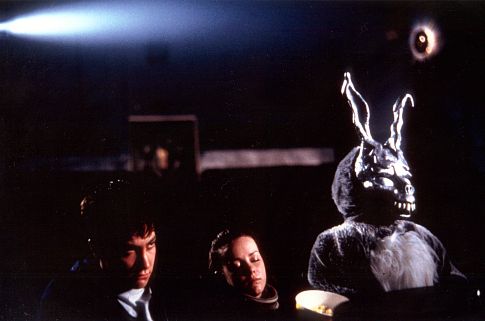
Opening with the first of numerous dream sequences we see throughout, it is unsurprisingly that comparisons between this film and “Donnie Darko” have been drawn, even though the dreams seen here are much more straightforward and lacking any of the symbolism that “Donnie Darko” so memorably played around with. Still while Smith might like Donnie be a dreamer, his dreams are much obscure in their relevance, especially with their focus often on random strangers than providing any kind of path or direction. However despite receiving these dreams Smith rarely seems to be affected by them, as he happily continues his day to day life of college lectures and casual sex, while pushing his own theories of sexuality by identifying himself as “undeclared”.

In many ways this film could be seen as the spiritual follow up to “Nowhere” the last film in Araki’s “Teenage Apocalypse Trilogy” especially as Smith and his friends seem almost like unused characters from that film. At the same time the film seems like an attempt by Araki to get back to his surreal roots, especially after his previous three films “Splendor”, “Mysterious Skin” and stoner comedy “Smiley Face” being more decidedly mainstream than the films which came before it. So while it might seem on the surface like an oversexed teen drama, it is all essentially part of the illusion that Araki weaves here, as the slightly odd and surreal moments such as Smiths’ dreams to Stella possessive witch girlfriend Lorelei (Mesquida).

Shot like a Bret Easton Ellis novel as seen through the lens of David Lynch, this gradual shift in reality is really the key strength of this film, for while his other films have generally thrown the audience head first into his surreal worlds and leaving them to figure out the ins and outs of that particular world, while he continues to tweak what is really happening and what is pure fantasy, a line frequently blurred by the characters frequent drug use. “Kaboom” to this extent is a real change in pace for while the characters might be hedonistic, with their main pleasures lying mainly in casual sex and hence giving us a rare sober world view for his characters. This however doesn’t stop Araki from tweaking this perceived idea of the film being based in reality, as things only continue to get weirder as he manages to take the film from a College drama about students looking for gratification through wild partying and casual sex to a film featuring doomsday cults, animal mask wearing strangers and a witch who really doesn’t take rejection well! All ideas that the established fanbase will no doubt lap up, while no doubt blowing the minds of the uninitiated as they try to make sense of exactly what they are watching.

It’s this style of storytelling though which draws the most negative criticism for the shift to it’s surreal finale, feels less of a smooth progression than his earlier films and could almost be seen as Araki no knowing were to take his established plot line of lust driven students and the thriller plot points and instead chooses to just thrown as much random plot ideas as he can at the screen with often only the characters sudden acceptance of their existence being their only grounding for existing within the film, while at the same time the random plot ideas are not so much tied up, but bundled together and thrown into the finale. At the same time though the film almost appears to be self aware of its frequent absurdity and even seems to make a joke of it with these final moments which had me questioning whether Araki ever really had an ending in mind or if this whole film was just an experiment in style?

The soundtrack is once again heavy with shoegaze and hip electro, making Placebo's "The Bitter End" being given a suprisingly prominent showcase the finale an interesting change of pace. Though like the cast it feels drenched in hip style, as Araki once again sets out to define his own brand of cool rather than just using flavor of the week bands for the soundtrack, which contains enough interesting noises and sounds to soundtrack scenes, but never to the point were it is being used to define what the audience should be feeling at any given moment.

Weird, strange yet still bizarrely enjoyable like the best of Araki’s films and its fun to see him playing around with his enfant terrible style which made him so memorable to begin with, so perhaps it is best to not question what you’re watching and just enjoy the ride.

Sunday, 10 June 2012

Piranha 3DD


Title: Piranha 3DD
Director: John Gulager
Released: 2012
Staring: Danielle Panabaker, Matt Bush, David Koechner, Chris Zylka, Katrina Bowden, Gary Busey, Christopher Lloyd, David Hasselhoff, Ving Rhames

Plot: After the events of “Piranha 3D” Lake Victoria has become inhabitable in an attempt to eliminate the threat of the pre-historic piranhas. However they continue to thrive as they now move upstream, soon finding their way into a newly opened waterpark.


Review: Since I was a kid, I’ve always had this irrational fear when using the local swimming pool, that a hatch would open somewhere in the pool and unleash a giant killer shark or some equally horrific creature from whatever movie I'd been watching that week to attack the unwitting swimmers. No doubt this could be linked to “Jaws” scaring my fragile child psyche from a young age, especially seeing how beyond unlikely such a thing would be to ever happen. Then of course comes along this movie to dig up all those fears again!

Coming a mere two years after “Piranha 3D” one of the more surprisingly good remakes of recent years as Alexandre Aja proved himself the king of the horror remakes, having successfully also remade “The Hills Have Eyes” and “In The Mirror”, however here he continues his trend of not returning for the sequels, as the reigns of the franchise are now passed over to Gulager who previously had directed the cult “Feast” trilogy, whose writers Patrick Melton and Marcus Dunstan also being brought on board to write the script, before Joel Soisson a man who is no stranger to DTV movies having wrote the script for the DTV sequels to Hollow Man, Mimic, aswell as the “Pulse” movies and seeing how at one point this film was too heading for a DTV release something especially rumored for the UK, it’s no surprise that the studio looked to him to rewrite the script. Still seeing how much fun “Piranha 3D” was with it’s heavy mix of gore and nudity, as well as arguably being one of the few films to justify the use of 3D as a film making medium, I was looking forward to another swarm of killer Piranha, especially with the Water Park setting being something I hadn’t seen done before, with the original plot line teased at the end of the last film which hinted at giant piranha now having been scrapped, possibly thanks to "The Asylum" beating them to the punch with "Mega Piranha", though it doesn't stop it from being as much fun as the original.

Opening with a quick recap of the events of the last film, including snippets of the spring break massacre, we are soon thrown back into the craziness as we get to see the always wonderful and Oscar nominated Gary Busey as one of two farmers poking the body of a dead cow which somehow has ended up in a lake. It’s during their redneck examination that we see that the Piranha have very much survived, with their eggs attached to the nearby reeds. Still thanks to this bumbling twosome causing said cow to explode by lighting the gas leaking from the cow they manage to unleash a whole new swarm into the water supply, while perfectly setting the tone for the rest of the film, for while the previous film might have played it largely straight, this one cares little for such things and hence aims for sheer randomness instead, with this opening essentially setting the tone for what is to follow.

This time around the action is based around the water park “Big Wet” the brainchild of owner Chet (Koechner) and even boasts “Water Certified Strippers”.  Returning home for the summer his step daughter and co-owner of the park Maddy (Panabaker) is understandably horrified by this latest idea for saving the park from closure, while her personal life is non the less chaotic as she runs in with her policeman ex-boyfriend Kyle (Zylka), aswell as the geeky Barry (Bush) who has secretly had a crush on her since they went to school together. Needless to say the last things she really needs is the shoal of hungry Piranha heading towards the park, yet considering that the first time she realises of their existence is after randomly encountering them on the jetty she is light speed quick to leap into action, not that it essentially makes any difference as you can tell by the trailer, but it’s good to see smart female lead who doesn’t rely on her handsome love interest to help her save the day, as most of the time she seems to handle things pretty darn well on her own.

While none of the main characters from “Piranha 3D” have returned here, we still surprisingly get quite a few of the more popular supporting characters making a return with Christopher Lloyd once again on suitably barmy duties as the marine biologist Mr. Goodman, while essentially clearing up any questions regarding the piranha getting into the water system. Meanwhile despite seemingly  dying in the first film Ving Rhames returns for another round as Deputy Fallon only now with the added bonus shotgun legs, something which might have been questionable before, but by this point in the film you’ll be pretty much willing to except anything the film throws at you, plus Ving Rhames always seems to be the guy you’d want taking control of the situation when the shit goes down be it zombies (Dawn of the Dead) or killer piranha he always seems ready to kick ass at the drop of a hat. Also adding to the randomness quota we also have David Hasselhoff hamming things up by playing himself, a role which could easily have gone either way, but here it is played with the right amount of cheese to make it a fun cameo, even if he essentially playing his Hoff alter ego, which he seems to have strangely evolved into these days.

While the gore quota might not be as high as the carnage unleashed in “Piranha 3D” it is still high enough to make for a satisfying watch, especially with a great scene involving a decapitated head, much like the much talked about piranha which finds itself in a rather unique position to say the least. Still what has increased in the meantime is the humour quota with Koechner once again bringing his usual shitkicker styled humour, while the majority of the humour on offer is mainly sex based from Adrian Martinez’s “Big Dave” humping a pool suction valve to a piranha chomped penis once again making an appearance. No doubt the humour content will turn off some viewers but you have to at the same time question what you were really expecting from a movie called “Piranha 3DD”??

While not better than the previous film, it is a fun watch and manages to combine crass humour with high gore, while not outstaying its welcome thanks to its fast paced plotting. Still if you’re a fan of mutant fish, copious amounts of exposed breasts and a healthy dose of splatter you will no doubt lap this one up, while for those expecting alittle more meat and more importantly brains with their horror, your best giving this one a miss.
Related Posts Plugin for WordPress, Blogger...